


















































































































































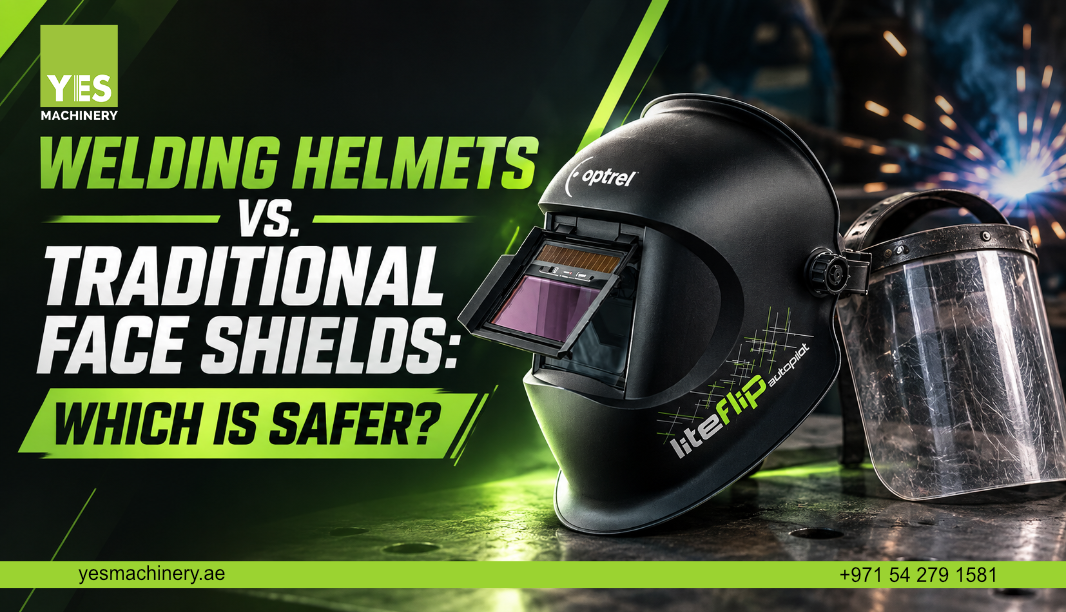
Welding Helmets vs. Traditional Face Shields
- Category Welding
Welding is rigorous work, and prolonged operations test the human eye with relentless exposure to bright light, heat, and harmful rays. For welders, the protective equipment plays a huge roll in the health of their eyes in the long run. Basically, choosing the best protective equipment comes down to modern welding helmets and traditional face shields. This article is trying to understand these two pieces of equipment, list out their features and benefits, and find which one best supports large-scale industrial welding works.
The Real Dangers of Welding
Before doing a thorough comparison between the two, the potential risks associated with the welding process need to be understood properly. The first one is the harmful UV and IR rays from the welding arcs that can lead to eye injuries and skin burns. Furthermore, there is heat and sparks that can damage the skin along with fumes and gases, of which inhalation can cause serious lung-related problems in the long run.
What Is a Welding Helmet?
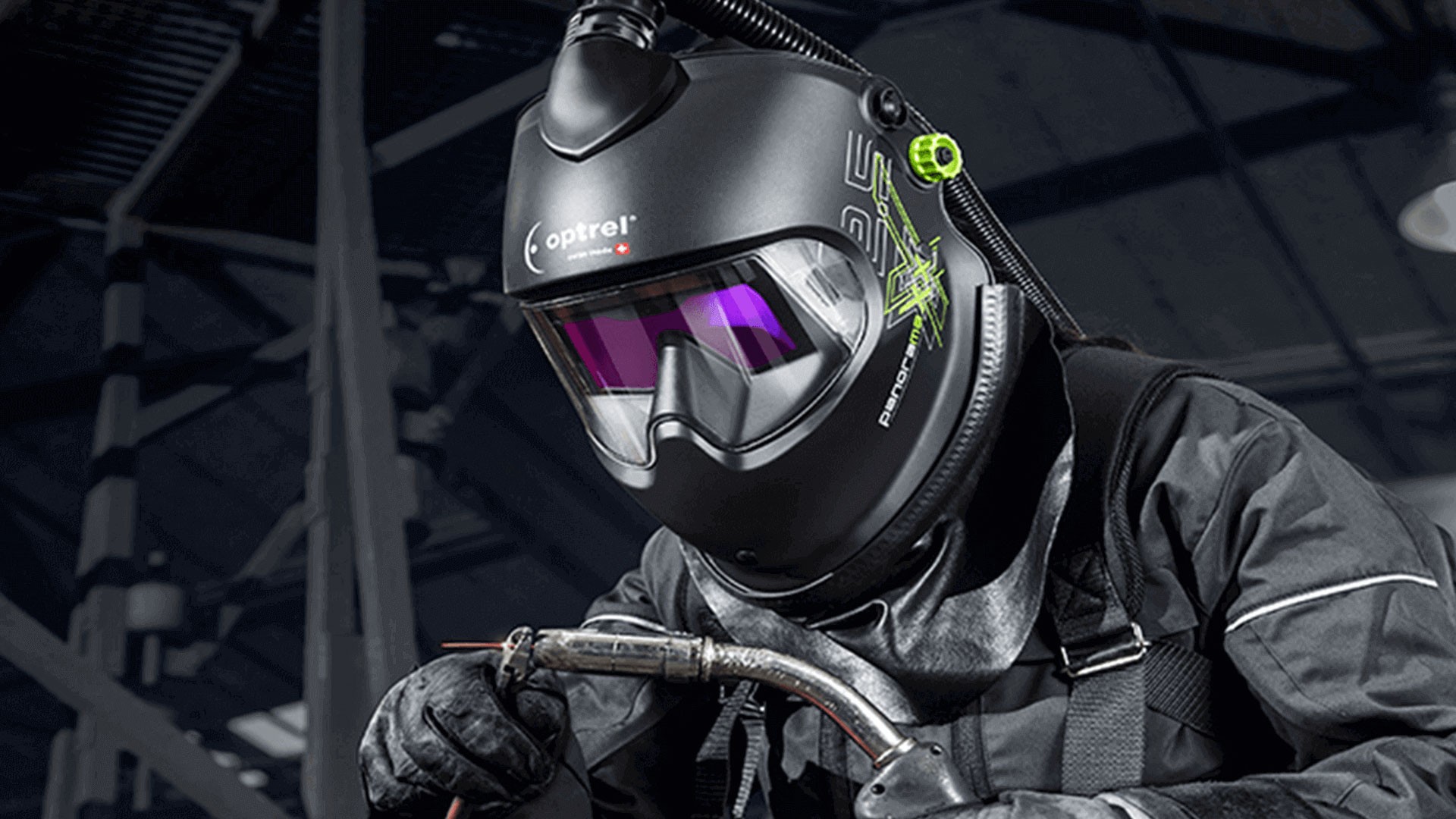
The welding helmet is welding protective equipment that is designed to fully cover the face during welding work. It comes in two main variants. Most helmets come with a permanent layer to block the UV and IR radiation, which is standard regardless of features or price.
Passive lens helmets
Passive lens helmets feature a dark shade lens. Although it offers great protection from the welding works, the downside is that it basically blinds the welder when the torch is not active, forcing the worker to remove the helmet and put it back on all the time.
Auto-darkening helmets
These welding helmets detect the arc’s light, then automatically darken when the welding starts, effectively letting the worker see through when not welding and protecting the eyes with an auto-darkening feature.
What Is a Traditional Face Shield?
The traditional face shield is an older and much simpler method of protecting the eyes while welding. It protects from sparks and other flying particles, but it doesn’t come with the auto-darkening technology, rendering it less effective and safe compared to the helmets. Hence, they are mostly found in general protection tasks as a secondary protective accessory, letting helmets handle the heavy-on-eyes, prolonged exposure.
Welding Helmet vs. Face Shield: Comparison Table
Feature | Welding Helmet | Traditional Face Shield |
| UV/IR Radiation Protection | Permanent blocking layer | Not designed to resist them |
| Lens Darkening | Available. Some models come with auto-darkening. | No dedicated welding lens at all |
| Visibility While Working | constant visibility through auto-darkening | Not for direct arc viewing |
| Spark & Debris Protection | Covers neck and face fully | Covers face, but with less specialization in that area |
| Comfort for Long Shifts | Padding included in the design, also adjustable | Lighter, less welding-specific |
| Best Suited For | Direct, prolonged arc welding work | General-purpose protection tasks |
Why Are Welding Helmets Better?
Conclusion
Search
Latest Blog
Categories
- Assembly and Lean
- Cleaning Machines
- Cleaning Robots
- Cutting, Notching, Punching
- Edge Preperation
- Grinding Machines
- Industrial Vacuum Cleaners
- Lifting
- Lifting and Manipulation
- Machines
- Marking Solutions
- Metal Forming
- Metal Joining and Fastening
- Packing
- Pipe Handling
- Storage Solutions
- Sweeper Tool Carrier
- Vacuum lifting machine
- Warehousing and Storage
- Welding
Related Blogs