




























































































































































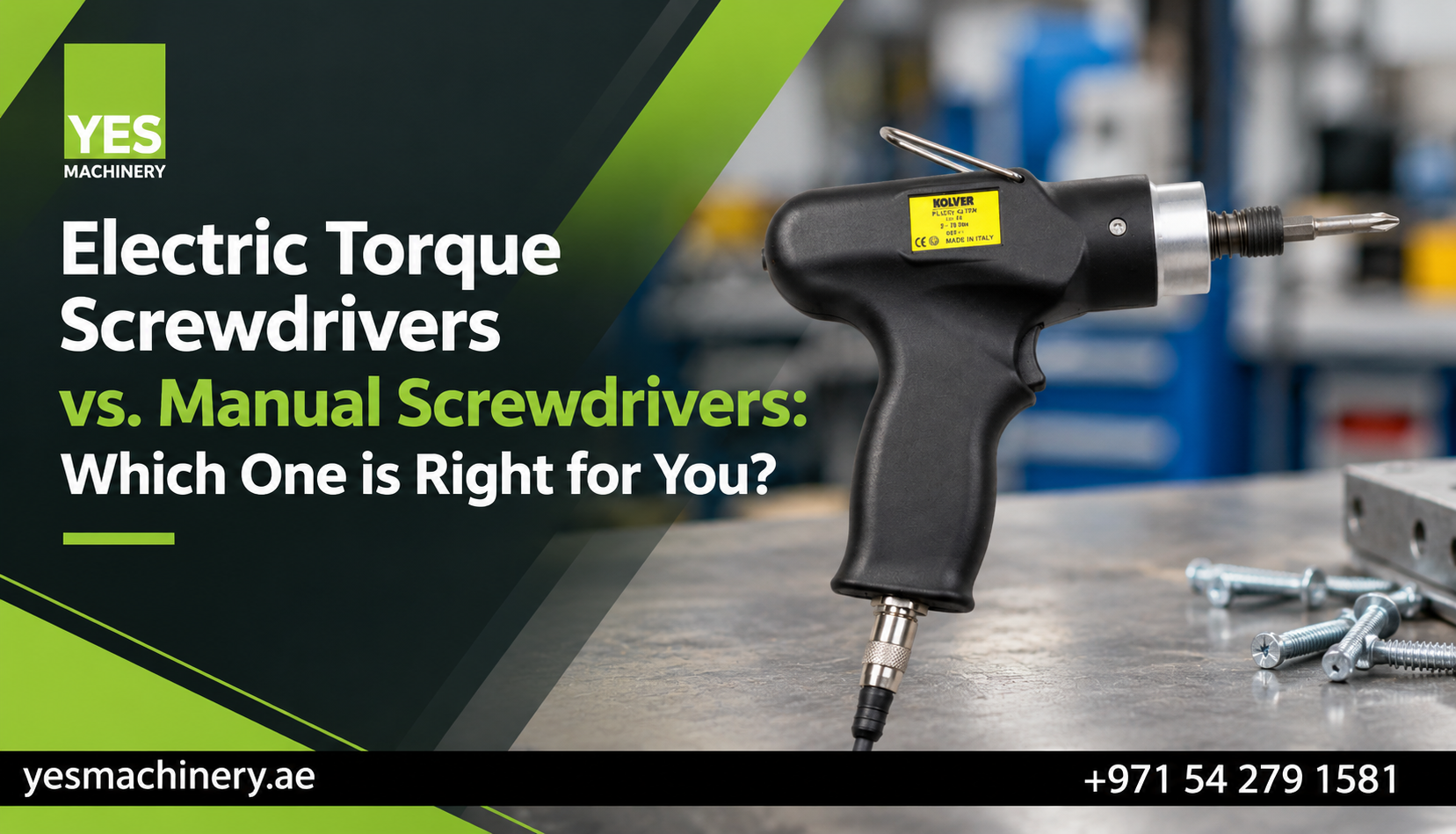
Electric Torque Screwdrivers vs. Manual Screwdrivers
- Category Machines
Properly fastening components is an essential step in electronics assembling, manufacturing, and even common household maintenance. Choosing between mechanical or electrical tools will have a direct impact on your work efficiency, quality and ergonomics. Here we will consider the pros and cons of electric torque screwdrivers and manual screwdrivers to help you make a wise decision regarding your tools purchasing.
Comparison between Electric Screwdriver and Manual Screwdriver
| Feature | Electric Torque Screwdriver | Manual Screwdriver |
| Power Source | Battery or Corded | Manual (Hand-operated) |
| Speed | Fast | Slower |
| Torque Control | Manual or automatic shut-off, depending on model | Fully manual |
| Fastening Consistency | High | Variable |
| Screw Damage | Very low | Moderate to high |
| Tactile Feedback | Minimal | Immediate |
| Weight | Heavier | Lightweight and slim |
| Operator Fatigue | Low | High |
| Limited Space | Moderate | Outstanding |
| Setup & Adjustment | Needs bit selection, torque adjustment, and periodic testing | No Setup needed |
| Price | Higher | Affordable |
| Maintenance | Clutch calibration, motor wear checks, battery management | No to Basic care and inspection |
| Quality Tracking | Available | None |
| Ideal For | Mass Production, Electronics & Repetitive Work | Maintenance, Field Repairs & Precision Work |
Key Takeaways
- Electric torque screwdrivers guarantee constant torque to prevent excessive tightening of fragile components.
- Manual screwdrivers offer unique haptics, no preparation time and perfect mobility for small jobs.
- Assembling lines can gain from fast operation and ergonomics of powered screwdrivers.
- Having both types of tools in your arsenal is a good choice.
What Are Electric Torque Screwdrivers and Manual Screwdrivers?
A screwdriver is a device used to drive screws through various materials to hold objects together securely. The two categories of screwdrivers accomplish this fundamental task using entirely different means of operation.
1. Electric Torque Screwdrivers
Electric torque screwdrivers are mechanical devices powered by an electric motor and a clutch that tightens screws to a predefined torque. Once the screw achieves the predetermined torque setting, the screwdriver automatically releases to avoid stripped threads or damage to sensitive assemblies.
2. Manual Screwdrivers
Manual screwdrivers are basic tools consisting of handles with ergonomic designs connected directly to hardened steel drivers and shafts to drive screws.
3. Main Operational Differences
The main operational difference between these tools is that electric torque devices emphasize efficiency, consistent accuracy, and reduced fatigue when doing mass production work. Manual screwdrivers give the operator full tactile feedback, complete independence from any power source, and immediate availability for fast field modifications.
Major Differences and Practical Comparisons
1. Torque Accuracy and Fastener Uniformity
The torque of electric screwdrivers is always uniform, and they apply precisely the same torque to all the fasteners in the assembly line process. In case the preset torque threshold is attained, the motorized screwdriver disengages from the fastener due to the presence of a built-in clutch. The torque accuracy of manual screwdrivers depends on human senses.
2. Speed of Assemblies and Efficiency of Operation
Electric screwdrivers tighten fasteners within a few seconds by applying thousands of rotations per minute to complete the assembly line. Such a speed ensures high productivity on a commercial production line where many screws are fastened by one person per day. Manual screwdrivers need many rotations with wrist movements per fastened screw. Therefore, they are suitable only for a small-scale assembly.
3. Wrist Tendon Strain and Ergonomics of Workers
Manual operation of a screwdriver results in excessive strain on wrists, forearms, and fingers due to repeated movement. Electric torque screwdrivers perform all the hard twisting and need a little guiding force from a worker who just guides the tool while working. Thus, this type of motorized screwdriver reduces the risk of strain injuries.
4. Tactile Sensitivity and Controlled Operations
When using manual screwdrivers, a person gets a tactile sensation for the interaction between the tool, screw threads, and material. An experienced user can immediately identify such defects as cross-threading, a stripped plastic screw, and loose fastening due to a soft seating surface. Electric screwdrivers isolate users from tactile sensitivity, which could cause damaging threads when screws are placed incorrectly.
5. Mobility and Accessibility of Tools
Manual screwdrivers are thin, light-weight, and able to reach places where thick and heavy tools cannot get access. They can be inserted into a pocket or tool box easily and used in any place where power cords, chargers, and outlets are not available. Torque screwdrivers have bulkier bodies and need to be equipped with batteries or cables to supply power.
6. The Price Factor
An excellent set of manual screwdrivers is affordable and will serve reliably for decades. On the other hand, electric torque screwdrivers are expensive due to built-in motors, calibrated clutches, and electronic mechanisms. Manual tools are preferred by small workshops, which have tight budget limits, until production increases the justification for purchasing expensive electrical equipment.
7. Maintenance Requirements and Reliability in the Long Term
Manual tools do not feature any moving parts, which implies that little maintenance is required. However, from time to time, it may be necessary to clean tips of such devices. Electric torque screwdrivers need frequent inspections of clutches, cords and calibration due to high demands related to torque certification standards. In case of electric screwdriver malfunction, special parts and technical assistance are needed while manual one seldom breaks.
8. Protection of Sensitive Parts and Plastics
Installation of sensitive circuit boards and fragile plastic shells necessitates control of the fastening torque of each fraction of torque. Electric torque screwdrivers can be regulated so that they would apply low torque for driving miniature screws without damaging plastic materials. If a person uses a manual screwdriver he or she could drive the screw tighter than required if pressed on it too hard or makes one rotation more.
9. Setup of the Screwdriver and Learning Process
To start using a manual screwdriver, a worker needs nothing except the screwdriver itself. He or she does not need time to learn how to operate it. However, the same task of setting the torque, choosing appropriate bit speed, connecting the device with the power supply is required before usage of electric torque screwdriver. Although it costs more time, it guarantees consistent results regardless of operator skill level.
10. Quality Control and Complying Manufacturing Standards
The modern requirements to fastening imply having a record proving that every critical screw was tightened according to engineering specifications. Advanced electric torque screwdrivers allow integration with recording systems that would track torque and number of screws applied to each manufactured product. There is no way to control it with a manual screwdriver, so quality managers cannot be sure about the compliance of fasteners.
Conclusion
Deciding which between the electric torque screwdriver and the screwdriver should be used depends on the amount of work at hand, speed requirements, and financial capabilities. The electric torque screwdriver has the speed and torque required when performing repetitive jobs. The manual screwdriver provides unmatched portability and fine touch feel. The manual screwdriver provides unmatched portability and fine touch feel. To know more, contact the YES Machinery team.
Search
Latest Blog
Categories
- Assembly and Lean
- Cleaning Machines
- Cleaning Robots
- Cutting, Notching, Punching
- Edge Preperation
- Grinding Machines
- Industrial Vacuum Cleaners
- Lifting
- Lifting and Manipulation
- Machines
- Marking Solutions
- Metal Forming
- Metal Joining and Fastening
- Packing
- Pipe Handling
- Storage Solutions
- Sweeper Tool Carrier
- Vacuum lifting machine
- Warehousing and Storage
- Welding
Related Blogs