



























































































































































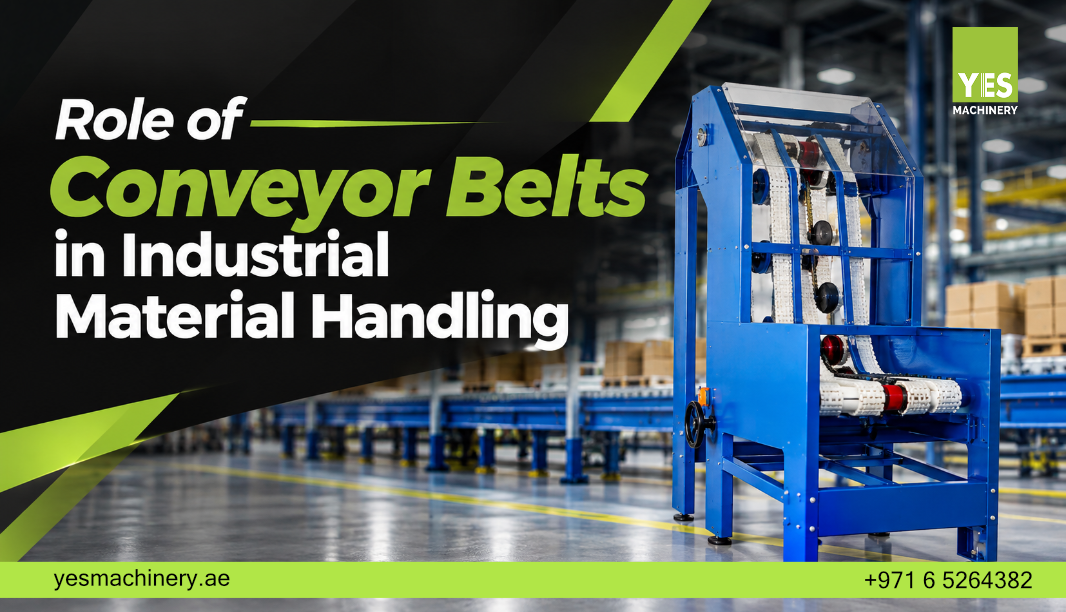
Role of Conveyor Belts in Industrial Material Handling
- Category Machines
Conveyor belts play an important role in keeping modern factories running daily. In addition, these devices move raw supplies, packed boxes, and finished items around work areas without requiring a lot of manpower. Learning about these continuous moving bands helps businesses grow and save money on their operations.
What Are Material Handling Conveyor Belts?
Material handling conveyor belts refer to the continuous moving bands that are used for transporting objects, raw supplies, and finished products from one physical place to another within an industrial facility. The band works through the use of rotating pulleys that are driven by special electric motors to move items steadily over long distances. This mechanical equipment serves as the main transportation system in modern factories, busy distribution centers, assembly lines, and sorting yards.
Continuous Moving Items
The main powered pulleys move the sturdy belt loop over the metal structure to keep the items moving along production lines in factories. In other words, the continuous movement process eliminates the necessity to carry boxes or push hand carts manually around huge warehouse floors.
Diverse Materials Used
Modern material handling conveyor belts are made from various flexible materials such as rubber, woven cloth, plastic, or even steel cables. Choosing the right type of material guarantees that the transported items will not slip, tear, or get damaged while being transferred.
Design Flexibility
These machines have the ability to move horizontally, go up steep angles, move down to the floor level or even change direction around the factory corner. This physical ability enables the engineers to design flexible routes that match the factory layout perfectly.
Material handling conveyor belts : Practical Uses, Key Benefits and Advantages of Operation
1. Continuous Transport of Raw Materials
These robust belts provide a continuous supply of bulk raw materials right into the active processing machines. Mechanical transport of the bulk materials such as plastic pellets, metal components, grains and crushed rocks ensures there are no delays in the manufacturing process due to the loading procedure. These belts ensure that all processing equipment is continuously fed to minimize idle time.
2. Reduced Amount of Physical Work
Automatic transport of the heavy packages allows reducing the physical work that should be done by the working team. The operators will not have to spend the effort in lifting the heavy containers, carrying the bulky items, and moving from one end of the floor space to another one. This helpful operational change will free up employees to take care of more important activities.
3. More Safe Working Environment and Fewer Injuries
Manual lifting and moving is one of the most common sources of serious back pains, muscle tension and dangerous accidents. Motorized transport belts reduce the continuous strain of lifting and moving of the awkward objects on the slippery or busy shop floors. Clearing the floor space of the messy hand trucks and manual loadings will reduce the risk of accidents.
4. Fast Processing and Increased Daily Production
The conveyor belt transfers materials at a controlled pace which is more efficient than any manual method of transportation during long shifts in production. Machines are able to sort, pack, assemble and load several thousand individual packages within one hour without experiencing any fatigue or human errors. The impressive speed of this process makes it possible to satisfy all client orders and cope with unpredictable seasonal increases with confidence.
5. Secure Transportation
Packages are transported using automated conveyor belts smoothly across rollers, thus eliminating the risk of abrupt dropping or jarring that might occur during manual transportation. Smooth transfer protects fragile materials like electronics, bottled beverages, ceramic tiles, and glass items from potential damage that might occur while being transported. Less damaged products mean higher customer satisfaction rates, fewer product losses and decreased financial loss for the company.
6. Efficient Use of the Area
Floor area is usually limited within industrial premises but conveyors may be installed on walls or on ceiling beams. Raising transportation of products creates a free area for productive equipment, assembling areas and pedestrian routes. It allows growing companies to increase productivity without renting additional warehouse premises.
7. Perfect Combination with Modern Automated Sorting Machines
The innovative system works well with optical scanners, digital cameras, electronic weight scales, and intelligent pneumatic diverters. When parcels move fast on the rubber conveyors, the sorting system automatically diverts packages to their designated packing stations or delivery trucks. This kind of precision automation helps eliminate errors during sorting, prevent missed customer deliveries, and significantly speed up complicated distribution processes.
8. Incredible Energy Savings and Long-term Effectiveness
Modern conveyor belt systems include efficient energy-saving motors, adjustable drives, and long-lasting bearing rollers. All these elements use less electrical power in comparison with the utilization of a busy number of gas-guzzling forklifts for routine material transportation within a factory. Buying conveyor belt systems is a cost-effective solution since it saves money on fuel, reduces maintenance costs of machines, and develops an effective internal transport system.
9. Dependability in Extreme Working Conditions
Industrial rubber conveyors are designed specifically for proper work in extreme factory conditions which can quickly ruin any other mechanical equipment. High-quality rubber construction easily tolerates high temperatures of smelting furnaces, cold storage warehouses for food products, mining dust and corrosion in chemical plants.
10. Ease of Maintenance and High Lifespan
The conveyor belts made today have very durable layers and modular components which are quite easy to test, maintain and repair. The maintenance team can fix broken rollers, repair the motor drive system or patch any broken sections without disturbing other parts of the plant. Proper maintenance ensures that these tough moving belts function at optimal capacities for decades and provide good value for money.
Conclusion
Conveyor belts are the indispensable backbone of modern industries worldwide. These conveyors help to make up for dangerous, laborious manual work by providing an automated transport system which greatly enhances production capacity and ensures safety of workers and lowers expenses. Installing the right system of conveyors will ensure maximum efficiency in operation and timely delivery. For more details and recommendations, contact our team at YES Machinery.
Search
Latest Blog


Categories
- Assembly and Lean
- Cleaning Machines
- Cleaning Robots
- Cutting, Notching, Punching
- Edge Preperation
- Grinding Machines
- Industrial Vacuum Cleaners
- Lifting
- Lifting and Manipulation
- Machines
- Marking Solutions
- Metal Forming
- Metal Joining and Fastening
- Packing
- Pipe Handling
- Storage Solutions
- Sweeper Tool Carrier
- Vacuum lifting machine
- Warehousing and Storage
- Welding
Related Blogs