



















































































































































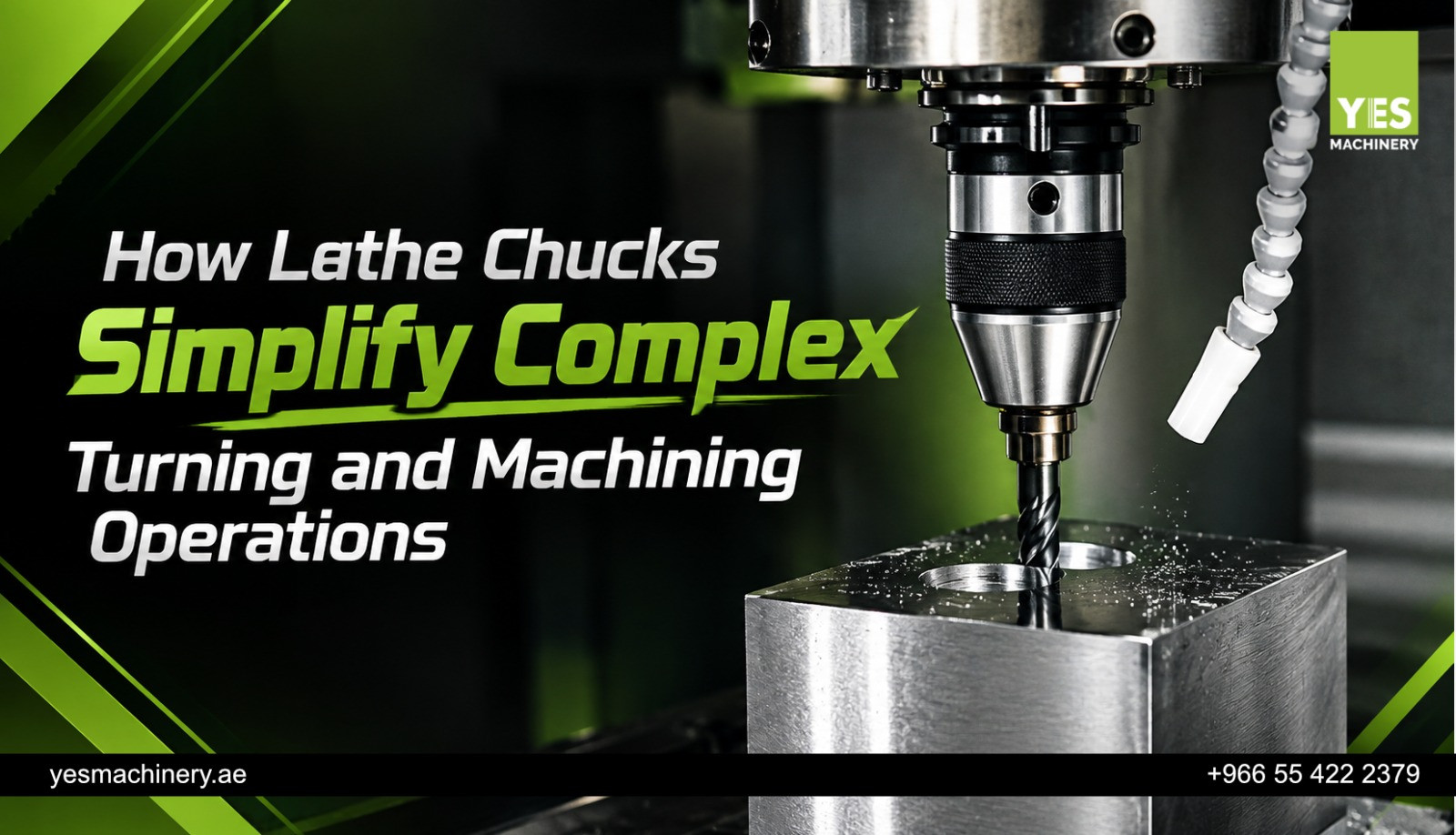
How Lathe Chucks Simplify Complex Turning and Machining Operations
- Category Machines
Turning a workpiece is not a simple process. More than just turning, most industrial precision operations may require high accuracy, steady rotation, and repeatable results. To achieve them, what you need is a reliable workholding solution.
Lathe Chucks help you securely hold the workpiece while they rotate in the lathe. Power chucks, on the other hand, take it to the next level and allow powered clamping for faster and more consistent workholding. This equipment is mainly used to make machining easier, faster, and more reliable.
What Are Lathe Chucks?
Lathe chucks are workholding devices and are fitted to a lathe. To grip and keep it steady in position a workpiece, they use jaws. There are different chuck designs with different capacities for various sizes and shapes of workpieces.
How Do Lathe Chucks Help During Machining?
The lathe chuck has only one job: hold the workpiece securely. When it turns, a reliable grip keeps it centered and stable. This will result in better cutting, drilling, boring, and other machining operations. Reliable workholding also eliminates any unwanted movement during machining.
Better Accuracy and Workpiece Stability
Sight movement of the workpiece can produce a below-par final result. With lathe chucks, you ensure a solid connection between the machine and the workpiece.
The right chuck makes sure your positioning is stable and rotation is accurate. This comes in super handy when the machining of parts depends a lot on dimensional consistency and finishes.
Power chucks give you constant clamping force. Both hydraulic and pneumatic variations can ensure firm and repeatable grip and reduce deviation between setups.
Faster Setup With Power Chucks
Traditional manual chucks require manual jaw adjustment by hand. But power chucks use a powered mechanism to open and close the jaws. The faster the workpiece changes, the less setup time and more machining time. In repeated works, this is jackpot.
How Power Chucks Improve Productivity
The clamping process becomes more consistent with power chucks. No need for the operator to adjust the jaws each time—he can just secure and release the workpiece easily.
This reduces non-machining time and nourishes the production flow. Consistent clamping also reduces errors compared to the manual setup as well.
Choosing Between Different Lathe Chucks
One chuck won’t suit all types of workpieces. For that, you have three-jaw chucks, which are commonly used and are able to center workpieces quickly. Four-jaw chucks, on the other hand, are more flexible on different shapes and sizes.
What is the right option then? Well, it depends on the workpiece, the machining operation, and the level of accuracy you expect. For any operations dependent on CNC turning and repeated production, which require faster and consistent clamping, power chucks are considered ideal.
Why the Right Chuck Matters
The chuck may seem a simple part of machining. But it really decides how the workpiece turns out. The right lathe chuck can improve stability, accuracy, and ease of setup. With power chucks, you get faster clamping and repeatable operation.
Choose the Right Chuck for Your Machining Needs
Whether you have a manual or CNC-controlled operation, having the right chucks at your facility makes all the difference. Lathe chucks hold your workpiece securely while power chucks offer automated clamping and faster and more consistent machining.
YES Machinery offers the best range of lathe chucks and power chucks for different machining requirements across the UAE. If you are looking for the ideal lathe chuck for your facility, contact our team to find the right fit for your application.
Search
Latest Blog
Categories
- Assembly and Lean
- Cleaning Machines
- Cleaning Robots
- Cutting, Notching, Punching
- Edge Preperation
- Grinding Machines
- Industrial Vacuum Cleaners
- Lifting
- Lifting and Manipulation
- Machines
- Marking Solutions
- Metal Forming
- Metal Joining and Fastening
- Packing
- Pipe Handling
- Storage Solutions
- Sweeper Tool Carrier
- Vacuum lifting machine
- Warehousing and Storage
- Welding
Related Blogs